

The Ea Council supports the restoration of sovereignty for the Hawaiian people, extending Hawai’i’s role as a leader for international peace.
Kāko‘o ka ‘Aha Ea i ka ho‘ōla hou ‘ana i ke ea o ka lāhui Hawai‘i, e ho‘onui ana i ke kūlana alaka‘i o Hawai‘i no ka maluhia honua.
“Ea” holds deep cultural, political, and spiritual significance for the original Hawaiian people.
At its core, “Ea” means:
- Life
- Breath
- Sovereignty
- Rising
When used as an exhortation or a call, Ea! is an urgent summons to rise, to awaken, to stand up, or to reclaim one’s rightful place—physically, spiritually, or politically.
Layers of Meaning:
- Ea as breath: Relates to ha, the breath of life—essential in Hawaiian cosmology. To say ea is to invoke the force that animates and sustains.
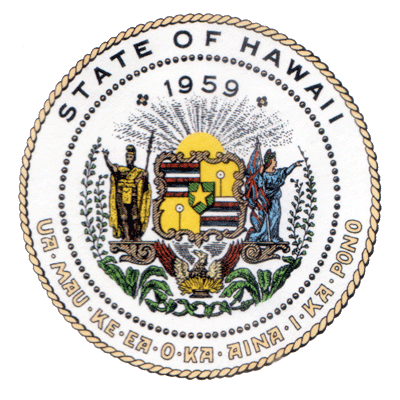
- Ea as sovereignty: Used in the phrase “Ua Mau ke Ea o ka ʻĀina i ka Pono” – “The sovereignty of the land is perpetuated in righteousness”—Hawai‘i’s state motto, originally spoken by King Kamehameha III in 1843 after the restoration of Hawaiian sovereignty.
When chanted or exclaimed, “Ea!” becomes:
- A rallying cry for justice
- A sacred call to awaken the spirit
- A reminder to breathe deeply and rise with purpose
At the beginning or end of a gathering, one might call out:
“Ea!”
And others respond — standing taller, breathing deeper, remembering who they are, and always were.
Visualization:
Meeting of the Ea Council
The first and central priority of the Ea Council is to support the restoration of the sovereignty of the Hawaiian people, advocating for their rights in every walk of life.
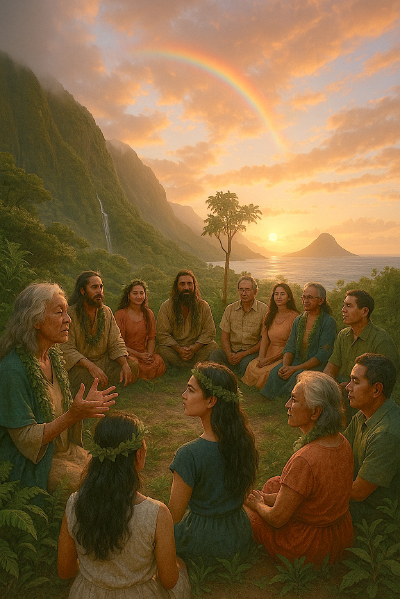
The Ea Council honors the tradition of the Hawaiian people, by supporting international peace among all people of the planet, in all directions across the great world ocean.
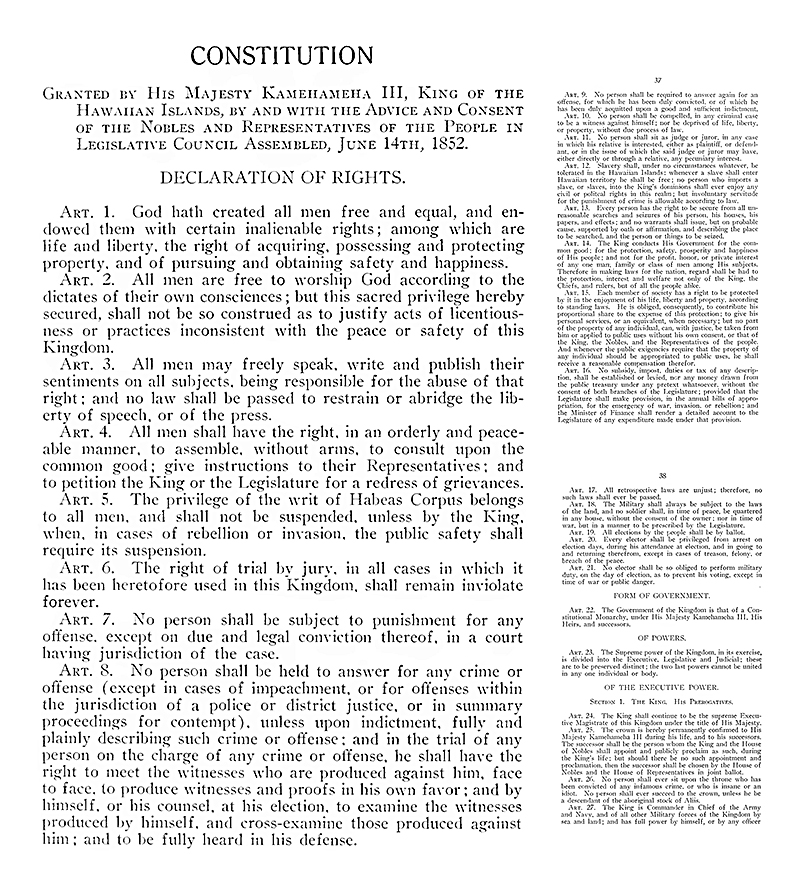
This tradition began in the era before European contact, and was enshrined in the Constitution of the Kingdom of Hawai’i, 1852, proclaimed by King Kamehameha III.
Hawai’i was among the first nations to accord citizenship to any person who requested it — welcoming all nations, all languages, cultures, philosophies and religions.
We must first ask permission from kupuna in today’s Hawaiian community, who practice and protect the original traditional culture, language, arts and sciences of the Hawaiian people. Non-Hawaiians and their organizations, who come from all nations in the world, may be invited to participate in the Council.
The Ea Council is an informal assembly of the diverse peoples of Hawai’i, with no independent legal registration or formal management structure. It meets when it needs to meet, decides by consensus, and supports all organizations with mutually-consistent principles.
A Chant of Healing for the Ancestors
He Oli Ea no ka Ho‘ōla o nā Kūpuna
Ea!
Ea ke ea o ka ʻāina,
Ea ke ea o ke kai,
Ea ke ea o ka lani,
Ea kuʻu ea, kuʻu ola, kuʻu leo.
Hele mai nā lāhui a pau,
Mai nā ʻaoʻao ʻehā o ka honua,
E noho pū i lalo o ka lā hoʻokahi.
E ho‘olohe i ka hāmau,
E hoʻoponopono i ka puʻuwai,
E ho‘ōla i nā mo‘okūʻauhau i ʻeha.
Hoʻokahi ka ʻāina, hoʻokahi ka leo,
Hoʻokahi ka puʻuwai i ke aloha.
ʻAʻohe ʻokoʻa i mua o ka moana—
He hale hoʻokipa ʻo Hawai‘i nei.
Ea!
Ea no ke ku‘ikahi,
Ea no ka ho‘oponopono,
Ea no ke ola o nā hanauna a pau!
A Chant of Healing for the Ancestors
Rise!
The life breath of the land,
The life breath of the sea,
The life breath of the heavens,
My breath, my life, my voice.
Let all nations come
From the four corners of the Earth,
To dwell beneath the one sun.
To listen to silence,
To make right what is broken in the heart,
To heal the wounded line of ancestors.
One land, one voice,
One heart in love.
No separation before the ocean—
Hawai‘i is the home of welcome.
Rise!
Rise for unity,
Rise for reconciliation,
Rise for the life of all generations!
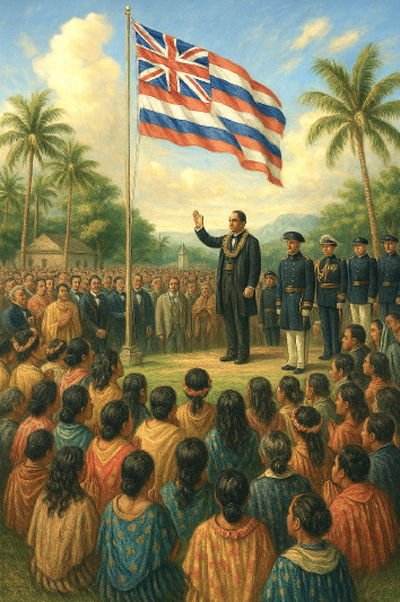
King Kamehameha III at the first Restoration Day
Thomas Square, Honolulu: July 31, 1843.
(Historic reconstruction)
With the King, British Admiral Thomas,
Hawaiian ali’i and kama’aina, British military,
international diplomats,
foreign residents, local citizens.
With thousands of Hawaiians, many of whom wept, sang, and
prayed during the solemn restoration ceremony.
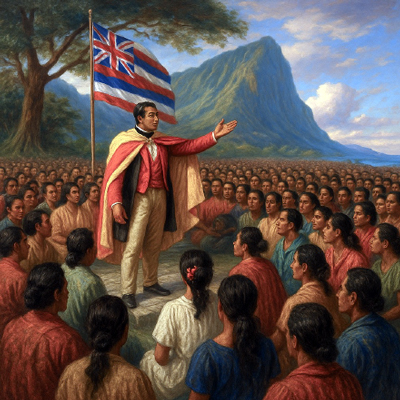
Visualization: July 31, 1843, King Kamahemeha greets his people
near Diamond Head, Waikiki after the formal ceremony of restoration
in Honolulu.
Weaving of Hawaiian spirit, ancestral healing, and the vision of Hawai‘i
as a sacred gathering ground for all nations, held in the breath of Ea.
The Historic Record
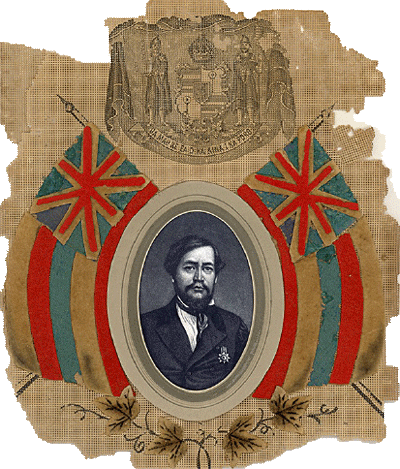
The Paulet Affair
In February 1843, British naval officer Captain Lord George Paulet unilaterally seized control of the Hawaiian Kingdom on behalf of the British Crown, claiming grievances related to British subjects living in the islands. He ordered the Hawaiian flag lowered and the British Union Jack raised, essentially occupying the islands.
For five months, the Hawaiian Kingdom lost its sovereignty—until Rear Admiral Richard Darton Thomas, a higher-ranking British naval officer, arrived in July. After reviewing the facts, Admiral Thomas ruled that Paulet’s actions were unauthorized and illegitimate, and immediately restored sovereignty to the Hawaiian monarchy.
Thomas Square today
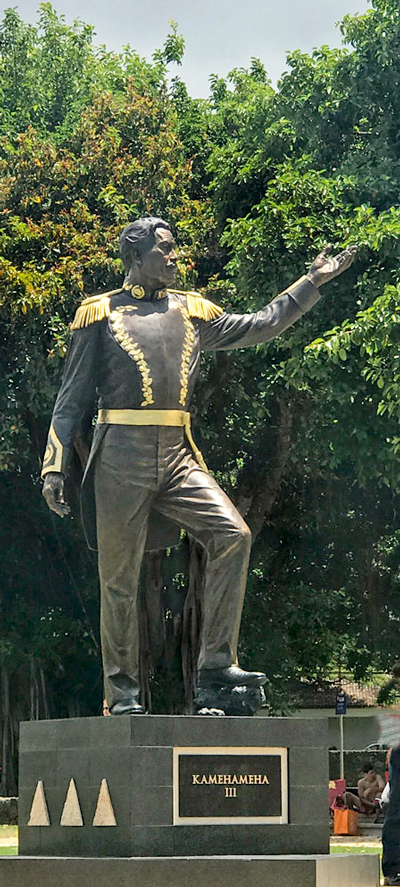
Links:
- https://warrensculpture.com/project/king-kamehameha-3/
- https://www.honolulumagazine.com/king-kamehameha-iii-statue-unveiled-on-hawaiian-sovereignty-restoration-day/
- https://www.alaulili.com/la-hoihoi-ea-hamakua.html
- https://kalahuihawaii.com/2018/07/31/175th-la-ho%CA%BBiho%CA%BBi-ea-at-thomas-square/
- https://en.wikipedia.org/wiki/Thomas_Square
- https://hawaiiankingdom.org/pdf/1852_Constitution.pdf
Constitution of the Kingdom of Hawai’i, 1852
Leave a Reply