饮食之道:与自然同频
饮食之道:与自然同频
Part 51 · The Way of Food: Resonating with Nature
一、食之清明,道自安然
I. When Food Is Clear, the Tao Settles Naturally
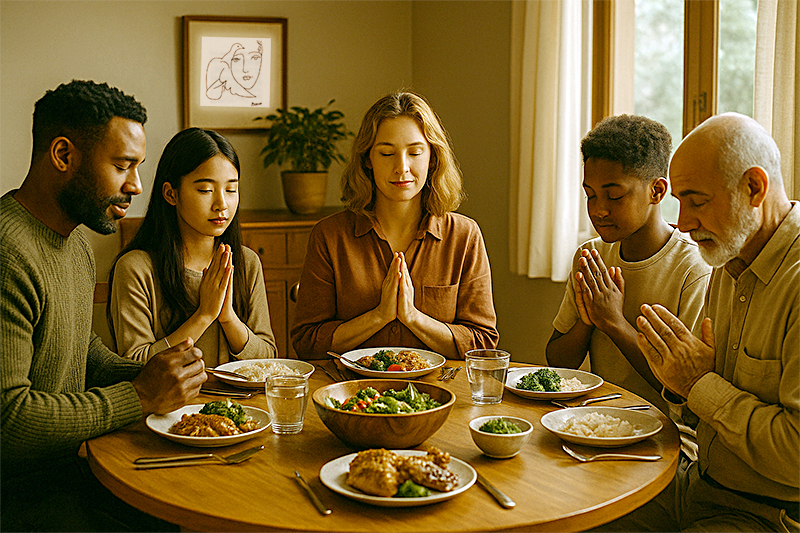
饮食,是人与自然之间最亲密的交流。
一粒米,一口水,皆承载天地之精华。
若能以清明之心饮食,自能得天地之养,行道之安。
吃得简单,胃乃轻松;吃得有节,心乃自在。
顺时而食,应节而养,是古人顺天而生的智慧;
观心而食,察身而养,是现代回归本真的觉知。
食不在多,贵在真;
味不在浓,贵在和。
一餐一饮之间,是修行的起点;
一念一动之中,是道心的回响。
食之清明,道自安然;
胃中无杂,心中自定。
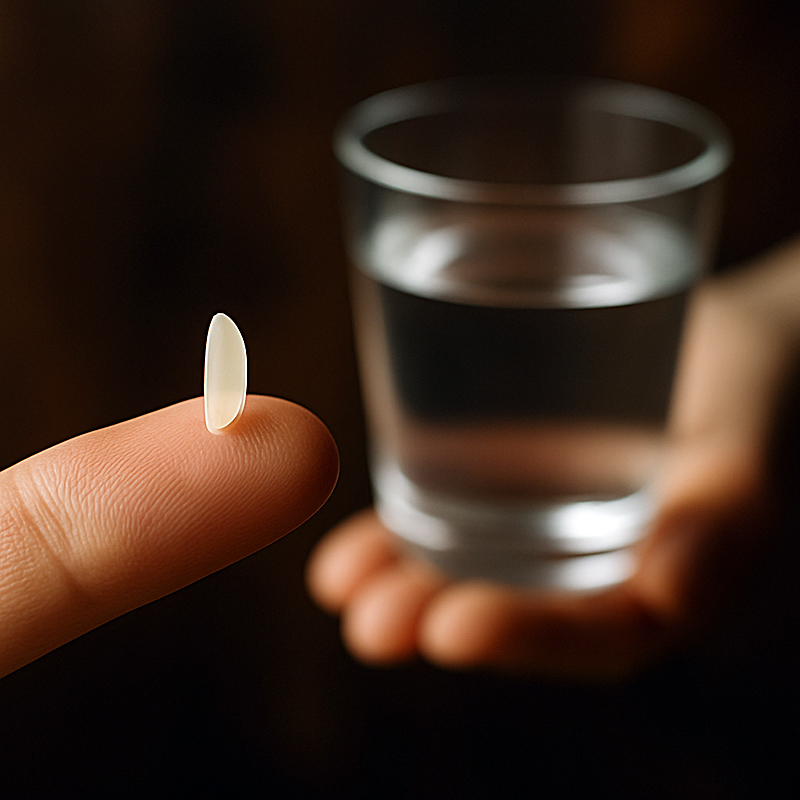
Eating is the closest dialogue between humanity and nature.
A single grain of rice, a sip of water—
each contains the essence of Heaven and Earth.
When we eat with a clear and mindful heart,
We receive nourishment directly from nature, and settle into the Tao.
Eat simply, and the stomach is light;
Eat in moderation, and the heart is free.
To eat with the seasons and nourish in harmony with the cycles
was the ancient wisdom of living in accord with Heaven.
To eat with awareness of mind and body
is to return to our true nature, today.
It is not the quantity of food, but the authenticity that matters.
Not the intensity of flavor, but the harmony within.
Each meal, each sip, is the beginning of spirit practice;
Each mindful moment echoes the heart of the Tao.
When food is clear, the Tao settles naturally.
When the stomach is unburdened, the heart becomes still.
二、顺天时而食,应四季而养
II. Eat with the Seasons, Nourish with the Times
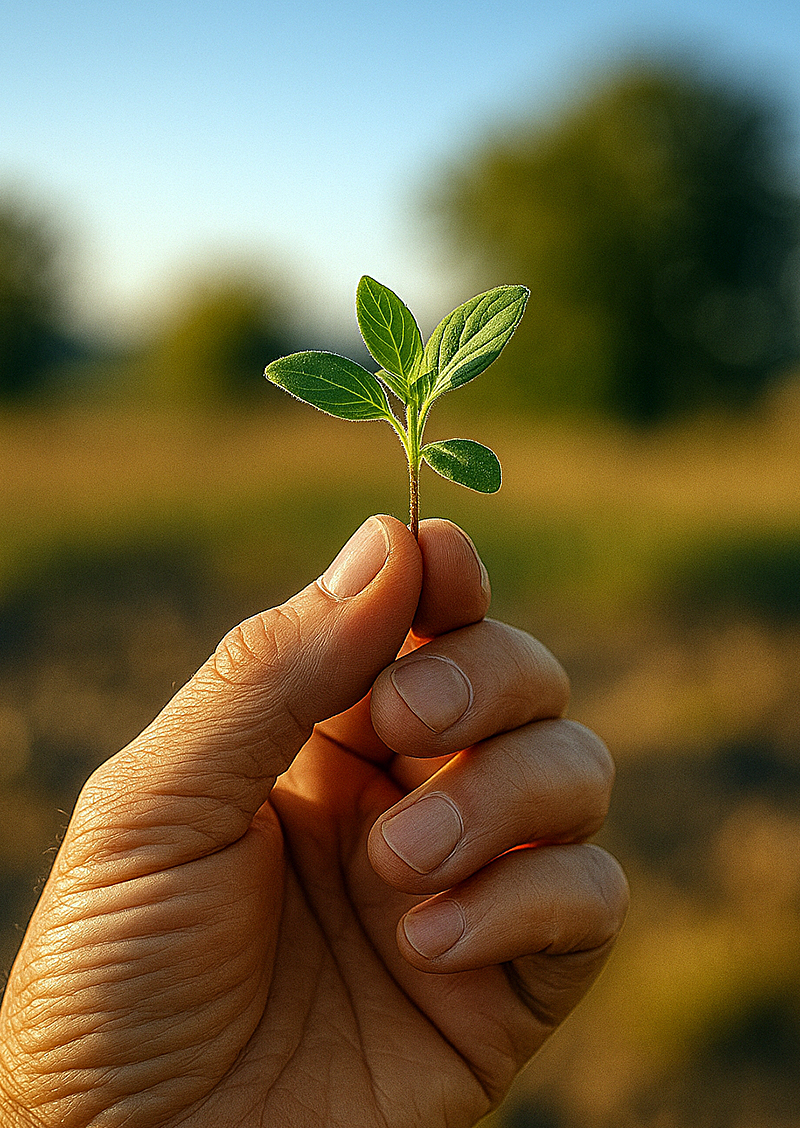
古人云:“春生、夏长、秋收、冬藏。”
食之道,即顺四时而为,因天地而动。
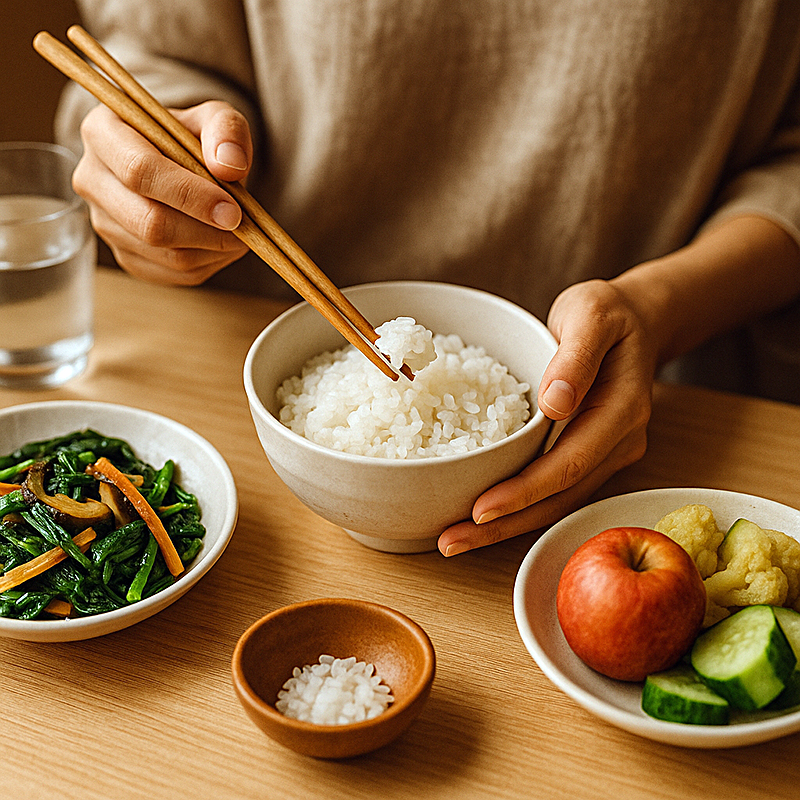
春日宜食甘温以生发,夏日宜清淡以清心,
秋日宜润燥以安肺,冬日宜温补以养藏。
顺天时者,体乃顺;逆天时者,疾乃生。
天地之气流转于食材之间,
每一味时令之物,都是自然对我们的馈赠。
人若不识时,不知味;
食若不应节,不通气。
顺天而食,是最质朴的养生之道,
也是最真实的顺道之行。
The ancients said:
“Spring gives birth, summer nurtures,
autumn harvests, winter stores.”
The way of eating follows this rhythm of the four seasons,
moving in harmony with Heaven and Earth.
In spring, eat warm and sweet to encourage growth;
in summer, eat light and cool to calm the heart;
in autumn, eat moistening foods to soothe the lungs;
in winter, eat nourishing foods to support inner storage.
Those who follow the timing of Heaven
align their bodies with health;
those who oppose it invite imbalance.
The energy of Heaven and Earth flows
through seasonal ingredients—
each seasonal food is nature’s offering to us.
If one does not understand timing, one cannot truly taste;
If food is out of synch with the season, it lacks vital energy.
To eat with the seasons is the simplest path to health,
and the most authentic walk in the Way.
三、食有节,身心安;食有喜,道自养
III. Eat with Moderation, Find Joy in Food,
and Nourish the Tao
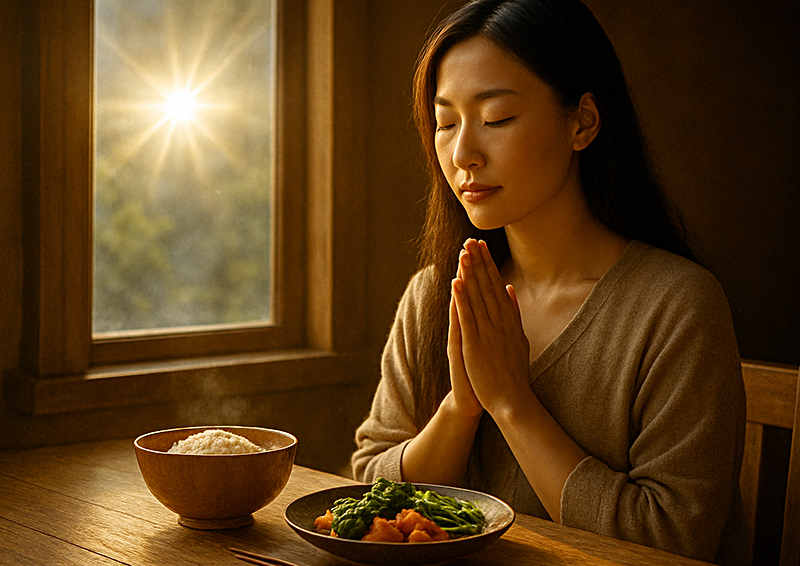
饮食,是生活中的修行。
吃什么,怎么吃,吃到几分,是一种心性的映照。
节,是对身体的尊重;喜,是对生命的感恩。
节制而不抑制,喜悦而不贪求,
是饮食中最和谐的境界。
过度,易伤;不足,易虚。
能知足、会适量者,气自顺、神自定。
食有节,五脏和;食有度,百病轻。
安然的身体,来源于清明的饮食态度,
更来源于对生活的觉知与敬意。
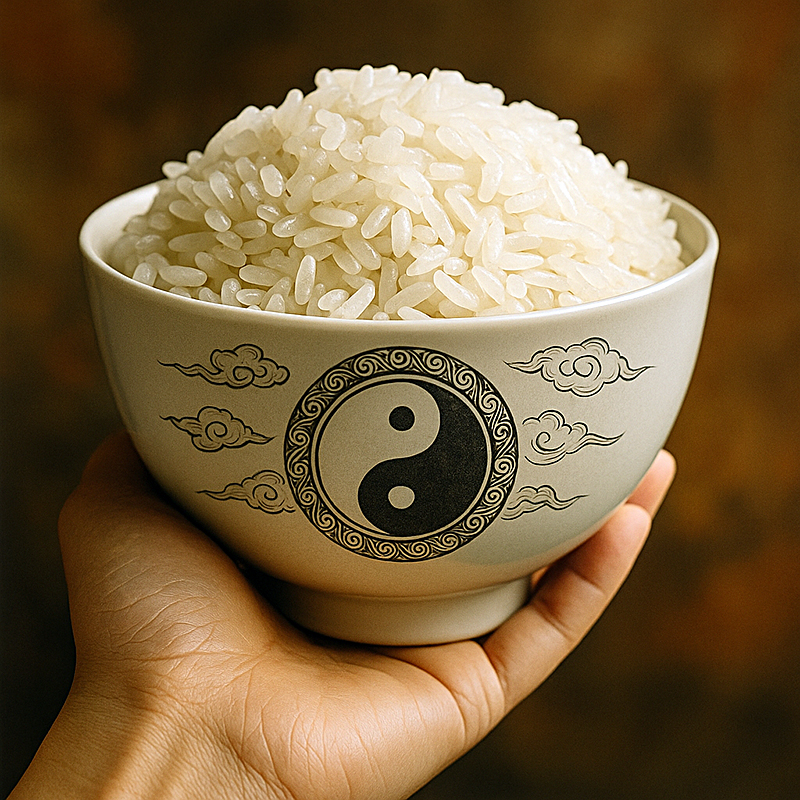
一口饭中有天地,一碗汤中藏大道。
当我们带着喜悦去食,
那食物也将转化为养心之气、养性之力。
如此,食即道,道即食。
Eating is the cultivation of daily life.
What we eat, how we eat, and how much we eat
all reflect our inner self.
Moderation is respect for the body; joy is gratitude for life.
Discipline without suppression, joy without indulgence—
this is the most harmonious realm of eating.
Excess brings harm; deficiency brings weakness.
Those who know balance and practice moderation
find their energy flows smoothly and their spirit remains steady.
Moderate eating brings harmony to the organs;
balanced intake lightens the burden of illness.
A peaceful body comes from a clear approach to food,
and from conscious reverence toward daily life.
In every grain lies the cosmos;
in every bowl, the Tao is hidden.
When we eat with joy,
our food transforms into nourishment for the heart
and strength for the spirit.
Thus, food becomes the Tao,
and the Tao becomes the food.
四、总理之道:一筷一箸皆有度
IV. The Premier’s Tao:
Discipline in Every Chopstick,
Compassion in Every Meal
周总理一生俭朴,自律至深。
饮食对他而言,不是享乐,而是责任、节制与关怀的体现。
他关心人民温饱,常说:“民以食为天。”
他以身作则,倡导节约粮食,尊重劳动成果,
每一口饭,都吃得干净,每一顿菜,都分得周全。
总理之饮食,是国之风范,是德之映照。
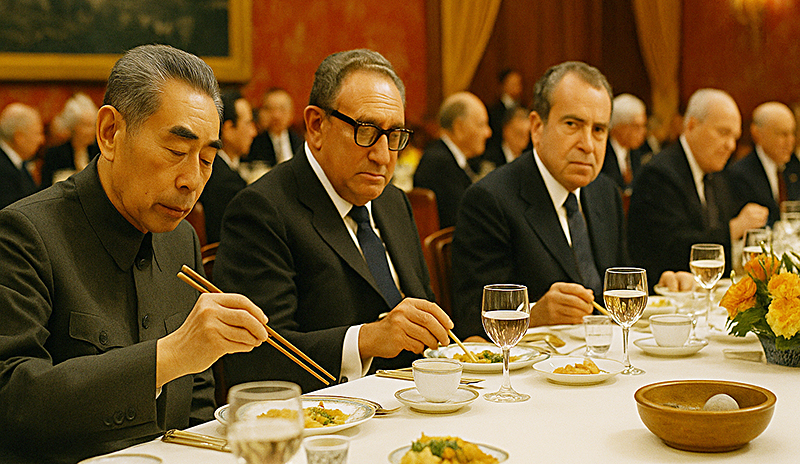
在外事宴请中,他既体现中华礼仪之雅,
又兼顾国家财政之度,不铺张、不浪费。
他亲自过问菜单与食材,确保来宾满意,也不扰民生。
他从不讲排场,饮食上不逾矩、不越份,
哪怕身体疲累,也从不多享。
在他身上,我们看到“以食养德”的真正含义,
也看到一个真正以人民为念、以节制为道的榜样。
他的一日三餐,是内在修养的外在体现;
他的一箸一筷,是天地之道的生动流露。
那是一种深沉的温柔,一种静默的坚定,
更是一种从餐桌传递出的和平精神。
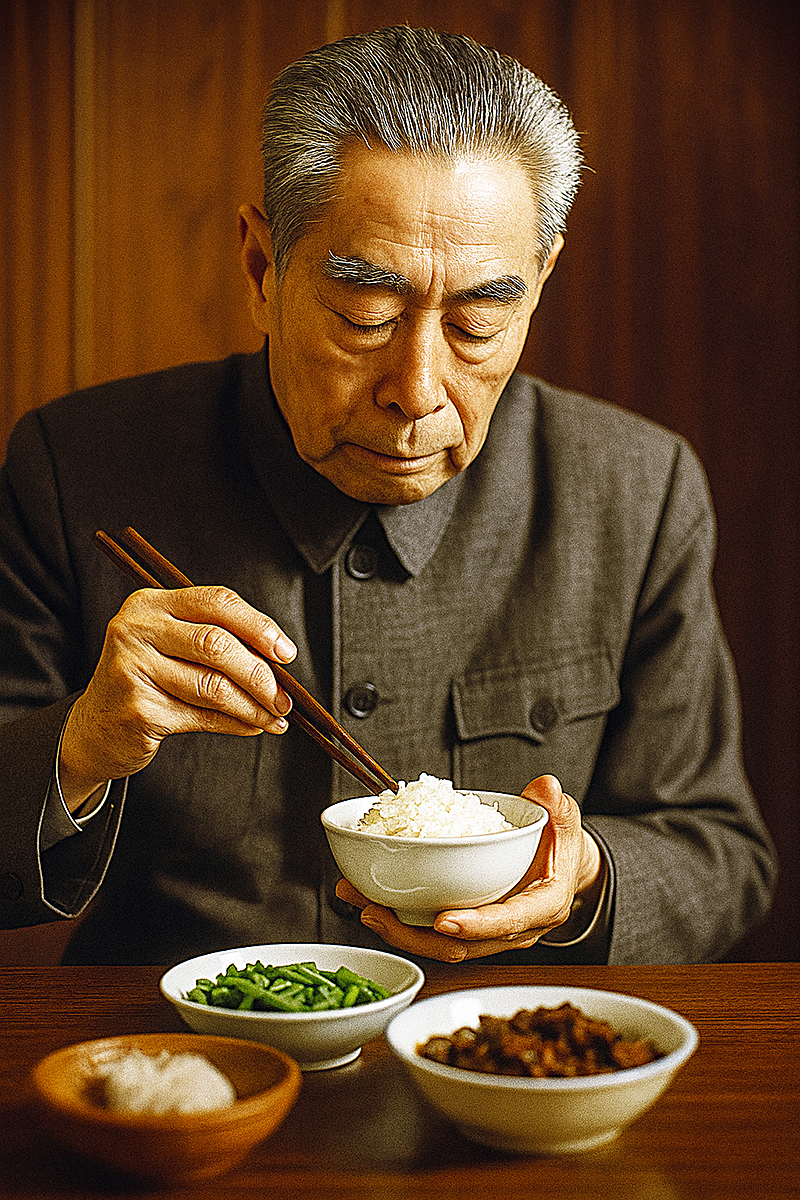
Premier Zhou Enlai lived a life of simplicity
and profound self-discipline.
To him, food was not indulgence, but a reflection of responsibility,
moderation, and care. He often said,
“The people regard food as their heaven.”
He led by example—cherishing every grain, respecting every harvest.
No bite was wasted; no dish was taken for granted.
His approach to food reflected the spirit of a nation
and the depth of his virtue.
At diplomatic banquets, he embodied
the elegance of Chinese hospitality
and the restraint of a responsible statesman—
never extravagant, never wasteful.
He reviewed menus and ingredients personally,
ensuring guests felt welcome
while safeguarding the people’s well-being.
He never sought luxury.
Even when exhausted, he never took more than he needed.
In him, we see the true meaning of
“nourishing virtue through food”—
a leader whose thoughts were always with the people,
whose Tao was moderation.
His daily meals were outward signs of his inner cultivation;
Every chopstick carried the rhythm of the Tao.
It was a quiet tenderness, a steadfast humility,
and a message of peace served gently from the dining table.
五、天地之食,道心所养
V. Food from Heaven and Earth,
Nourishment for the Heart of Tao
天地生万物,食为大恩。
五谷养命,百味润身。
真正的饮食之道,不在于奢华丰富,
而在于是否与自然同频、与身体相和、与心灵相照。
一粒米,有风雨之力;
一口水,有山川之灵。
当我们带着敬意进食,
就是在与天地对话、与万物和鸣。
食养身,亦养心;
饮清泉,思本源。
餐桌不只是身体的补给所,
更是心性修养的道场。
每一次用餐,皆是一次内外对话,
一次与自然共振、与自我和解的机会。
清明之食,道心自养;简净之餐,身心共安。
Heaven and Earth give rise to all things,
and food is among their greatest gifts.
Grains sustain life; flavors nourish the body.
The true Tao of food lies not in extravagance,
but in attunement with nature, harmony with the body,
and reflection with the soul.
Each grain of rice contains the power of wind and rain.
Each sip of water carries the spirit of rivers and mountains.
When we eat with reverence,
we engage in a dialogue with Heaven and Earth, in harmony with all creation.
Food nourishes the body and the heart.
Drinking pure water calls us to remember our origin.
The dining table is more than a place of physical sustenance;
It a sacred space for cultivating heart and character.
Every meal is a conversation—
a resonance with nature and a reconciliation with self.
When food is clear and pure, the Tao nourishes the heart;
when meals are simple and mindful,
both body and soul are at peace.